
Images: 1-3 Alex Gooding; 4-5 David Brazil; 6 Installation view from ‘Ad/dressing the Wound’; 7-8 Isabel Brison; 9-11 Stephanie Allerdice.
Anamnesis was first performed at Cementa22 as part of my Emergency Blankets project. This series highlighted the importance of care as a response to crisis, whether natural disasters, economic hardship, or mental illness. Anamnesis has subsequently been reprised on a number of occasions—‘Spirit Wave’ (2023); ‘Ad/dressing the Wound’ (2023); ‘Canberra Art Biennial’ (2024), ‘Picnic Among Friends’ (2026)—and has taken on a life of its own.
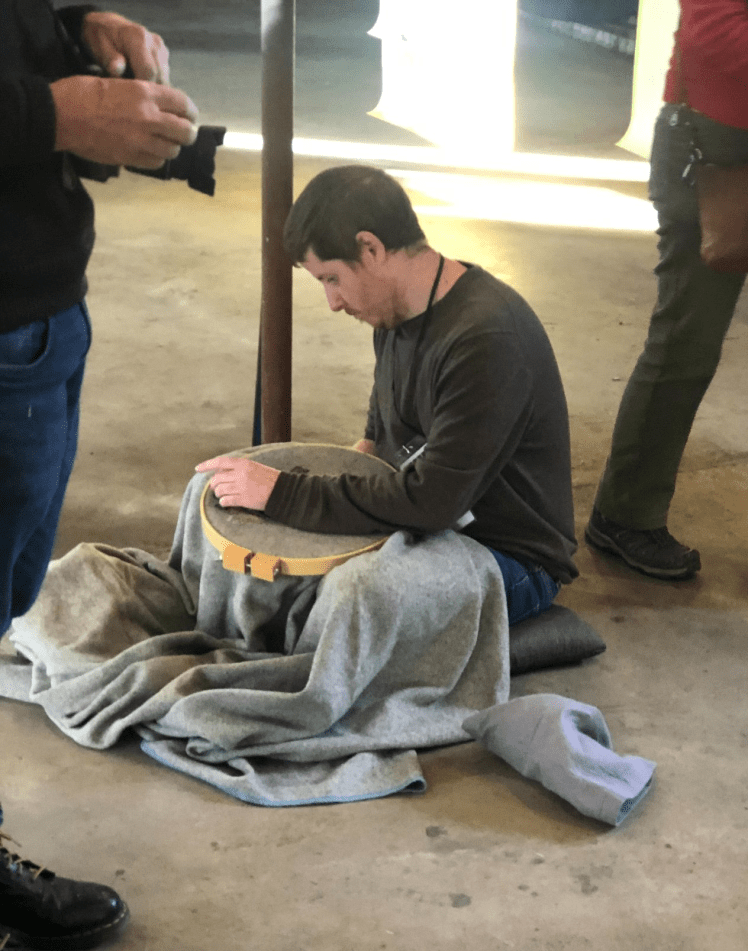
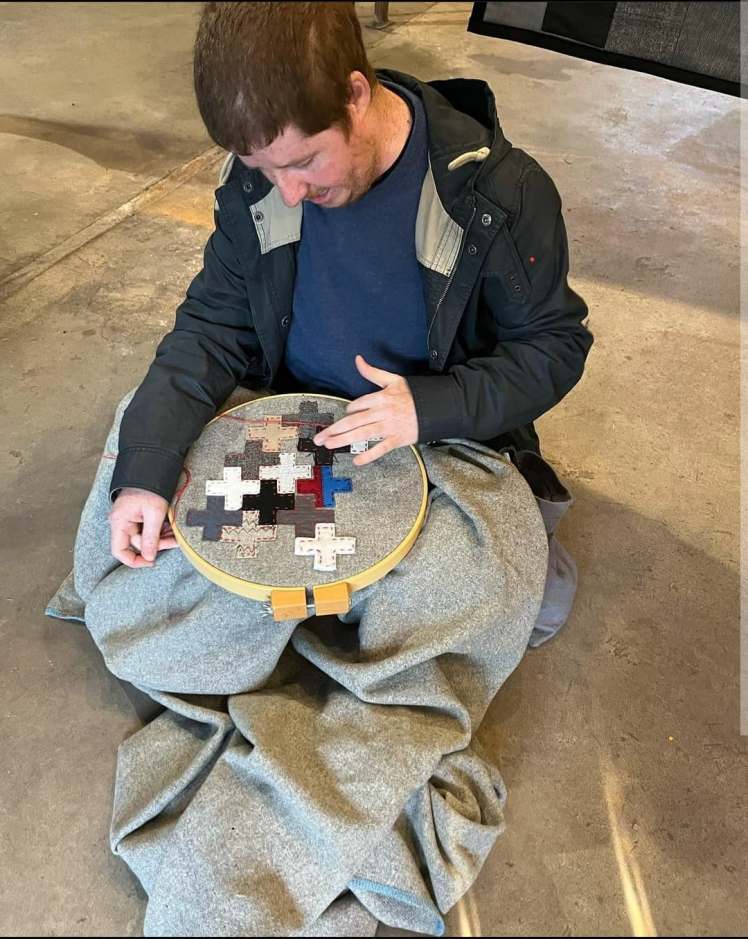
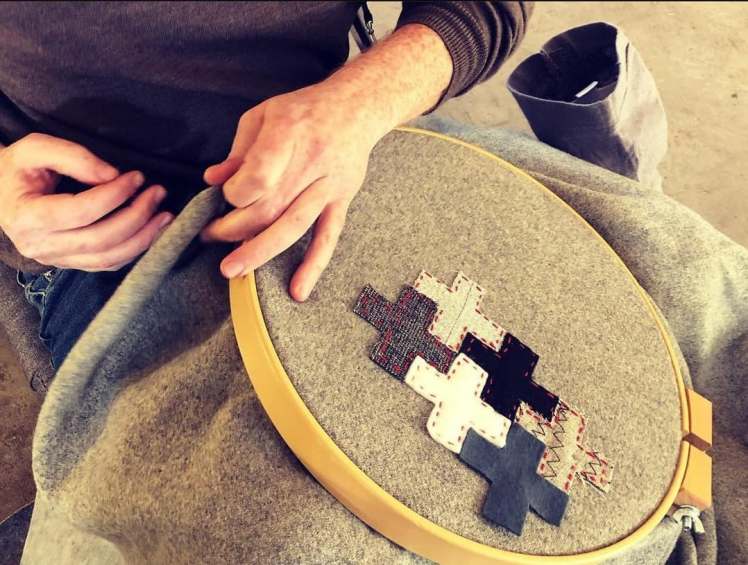
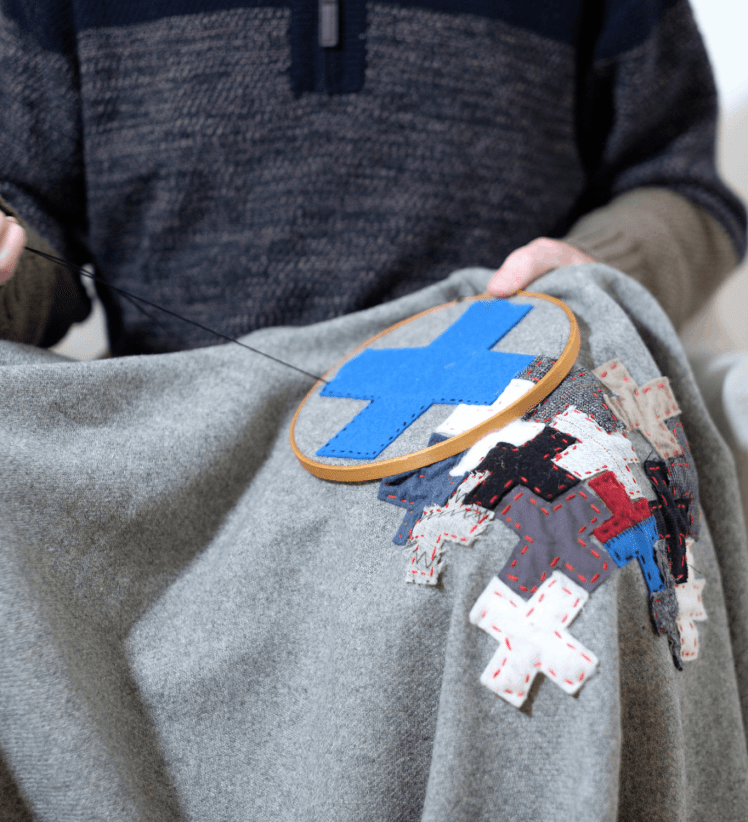
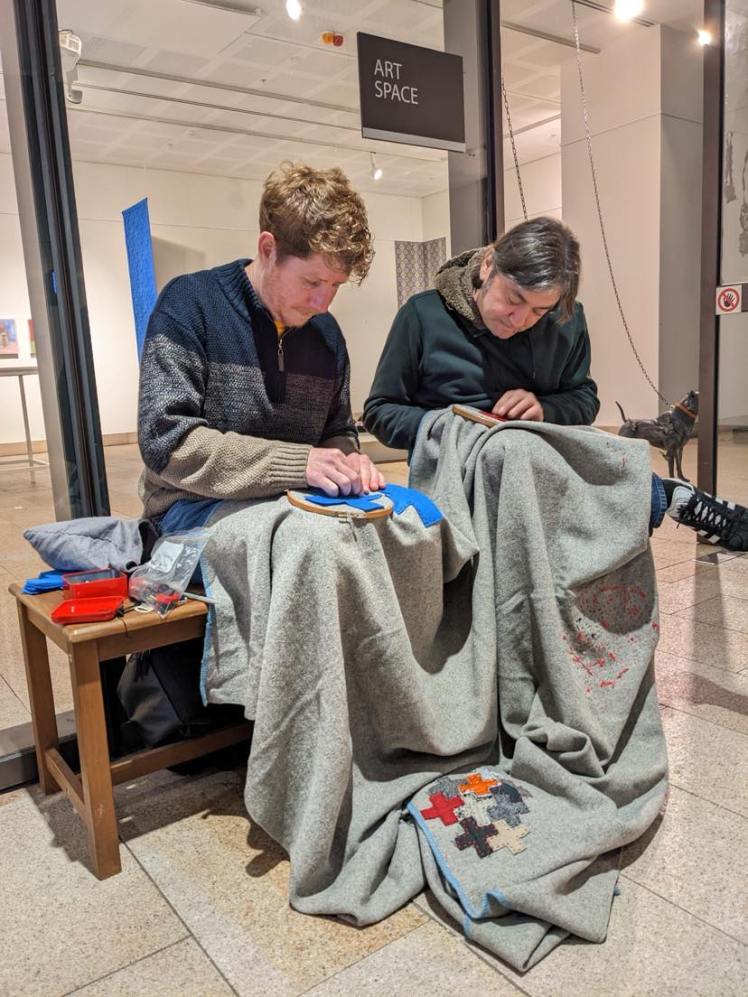
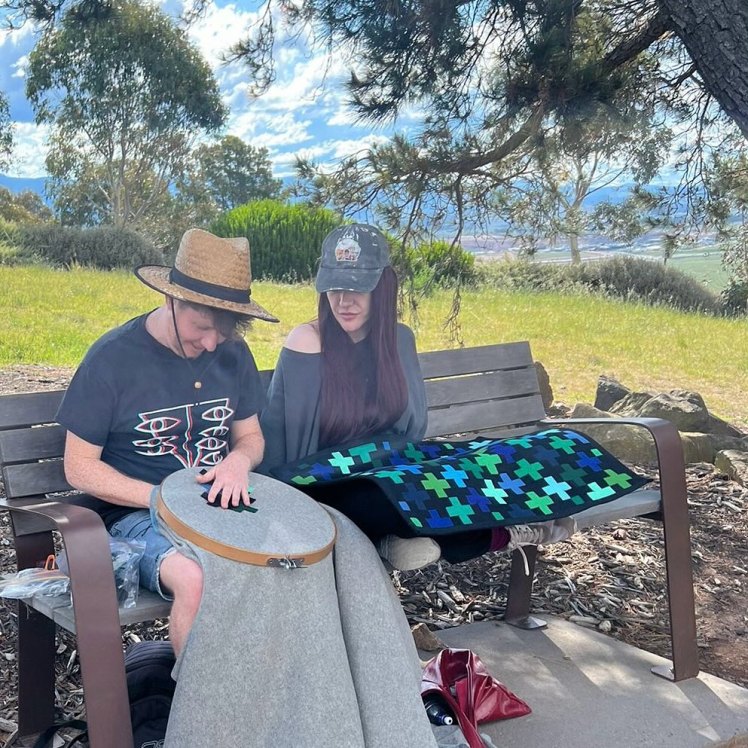
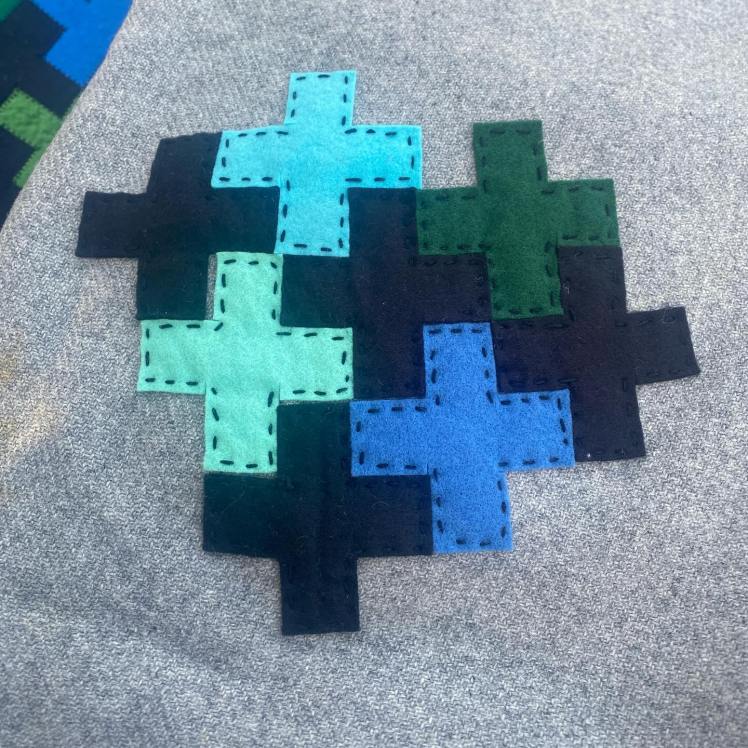
In the initial performance at Cementa22, I sat in the ‘Carnival Catastrophe’ exhibition space and sewed crosses onto a wool air force blanket that had belonged to my grandfather. The crosses were all cut out of scraps leftover from the process of making the Emergency Blankets. During the performance I also spoke with visitors to the exhibition. Many of these conversations were one-on-one and we frequently ended up talking about quite deep, personal matters.
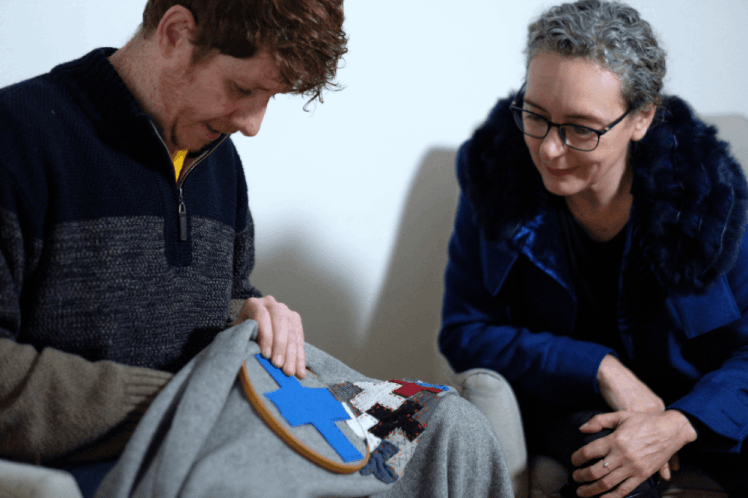
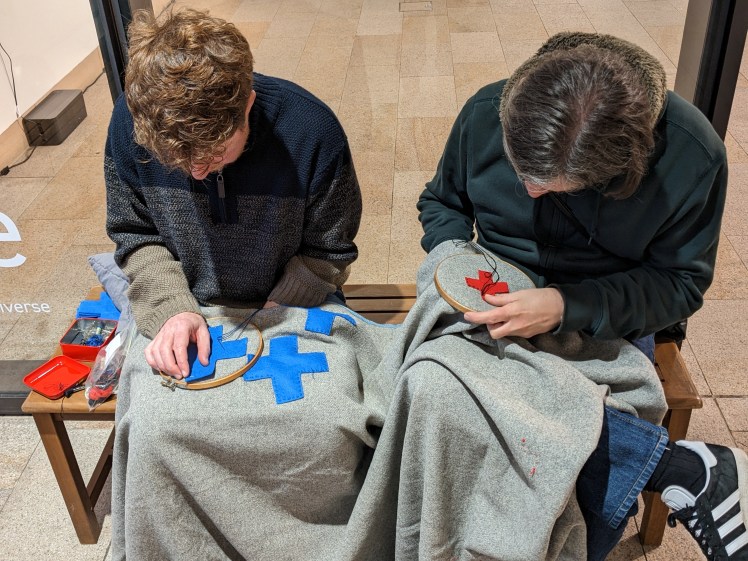
Subsequent versions of this performance have varied in different ways. Typically, I will make new crosses from the leftovers of whatever projects I am working on at the time. For the performances at ‘Spirit Wave’ (2023) and ‘Picnic Among Friends’ (2026), audiences were invited to join me by stitching crosses to the blanket if they would like.
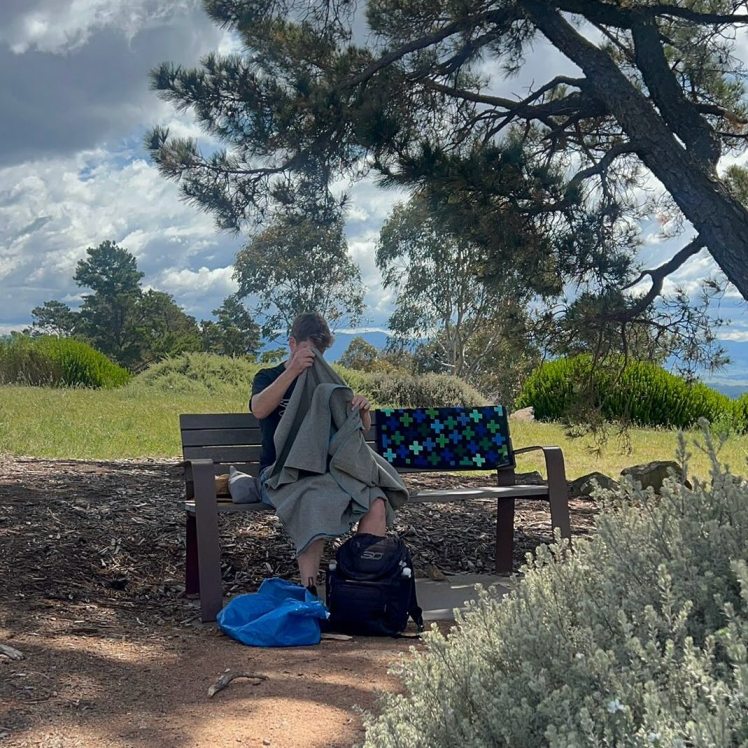
As part of the Canberra Art Biennial (2024), I performed in the National Arboretum Canberra and the work was titled Anamnesis Arboretum. For this version of the performance, I had produced a small lap blanket in memory of my brother who had recently died. I offered this lap blanket to audience members, to keep them warm and to open the conversation up to ideas of grief, mourning, memory and commemoration. This brief artist statement was displayed near the performance:
“Anamnesis Arboretum is a gentle, site-specific performance art piece conceived for the National Arboretum Canberra and inspired by the numerous memorial plaques attached to park benches there. This performance activates ideas of remembrance, story telling (and retelling), creative practice, and listening as important acts of care.”
 Tom Isaacs